


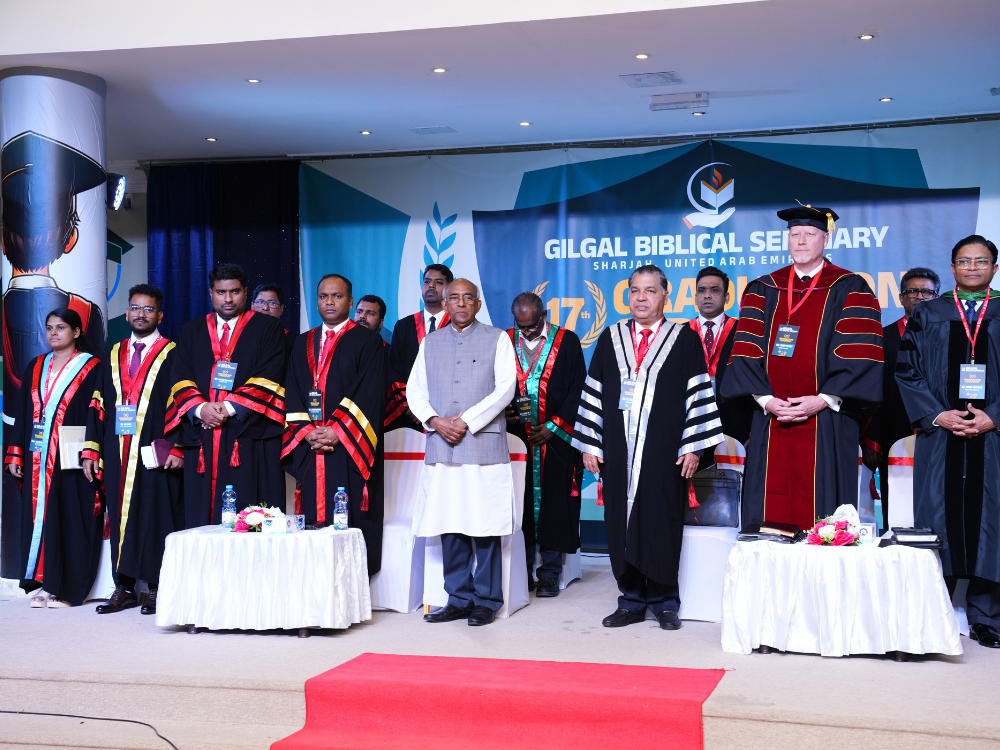
Here is a new blog post suitable for the GBS website — academic in tone, spiritually rich, and aligned with your seminary identity.
Why Theological Education Matters in Today’s Global Church
In every generation, the church faces new challenges. Cultural shifts, technological advancement, moral confusion, and theological distortion continue to reshape the landscape of Christian ministry. While the gospel remains unchanging, the context in which it is proclaimed is constantly evolving.
In such a time, theological education is not optional — it is essential.
A Church Without Foundations
The early church devoted itself to “the apostles’ teaching” because doctrine shapes destiny. When biblical truth weakens, spiritual confusion increases. Churches may grow numerically yet remain shallow doctrinally. Leaders may be passionate but lack theological depth. Believers may be sincere but unprepared to defend their faith.
Theological education provides a strong foundation rooted in Scripture. It trains leaders not only to preach sermons but to understand the grand narrative of redemption — from Genesis to Revelation — and to interpret it faithfully within contemporary realities.
The Need for Biblically Grounded Leaders
Modern ministry demands more than enthusiasm. It requires leaders who:
- Understand Scripture deeply
- Interpret theology responsibly
- Engage culture thoughtfully
- Shepherd people compassionately
- Defend the faith intelligently
Without theological training, ministry can become reactive rather than rooted. A trained leader brings clarity in confusion, stability in crisis, and conviction in compromise.
Integrating Head and Heart
True theological education is not merely academic. It is formative.
Information alone does not produce transformation. Seminaries must cultivate both intellectual rigor and spiritual maturity. Prayer, character formation, pastoral wisdom, and ethical integrity are as vital as exegesis and doctrine.
A healthy theological institution shapes both the mind and the heart — preparing leaders who live what they teach.
Engaging a Diverse and Global Church
Today’s church is global and multicultural. Mission fields are no longer distant lands alone; they are cities, campuses, workplaces, and digital platforms. Leaders must understand intercultural ministry, contextual theology, and global mission strategy.
Theological education equips students to engage different worldviews while remaining faithful to biblical truth. It fosters humility, cultural sensitivity, and missional clarity.
Preparing the Next Generation
One of the greatest responsibilities of the church is to prepare the next generation of leaders. Pastors, missionaries, educators, and scholars must be trained intentionally.
Theological education provides:
- Structured biblical learning
- Historical and doctrinal awareness
- Research and analytical skills
- Pastoral leadership training
- Missional vision
Through this formation, graduates are prepared to serve with confidence and competence in diverse ministry settings.
The Long-Term Impact
The impact of theological education extends beyond classrooms. Every trained pastor influences a congregation. Every equipped missionary touches communities. Every prepared teacher shapes future leaders.
When theological education is strong, churches become healthy. When churches are healthy, communities are transformed. When communities are transformed, the witness of Christ advances globally.
Conclusion
Theological education is not merely about earning a degree — it is about preparing for faithful service. It anchors leaders in Scripture, strengthens conviction, refines character, and expands mission vision.
In a world that constantly changes, the church must remain rooted in truth. And that requires leaders who are deeply formed, biblically grounded, and spiritually mature.